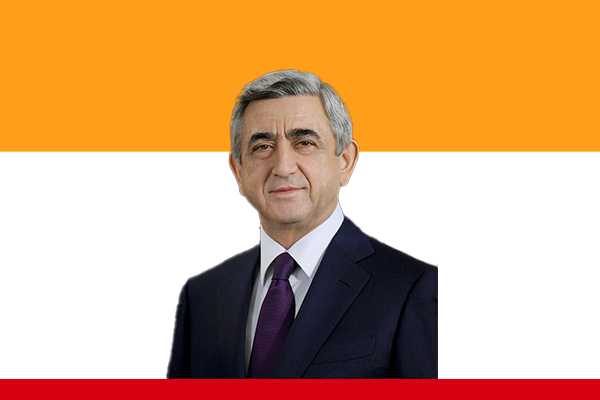
Mr. Serzh Sargsyan
In Office: 4 April 2007 – 9 April 2008
17 April 2018 – 23 April 2018
Political Party: Republican Party
Home State: Stepanakert
Lifespan: born 1954
Country: Armenia
Image credits available here.
Early Life and Education
Serzh Sargsyan was born on June 30, 1954, in Stepanakert, a city in the Nagorno-Karabakh region, which was then part of Soviet Azerbaijan. He received his early education locally and later attended Yerevan State University, where he studied philology. His education helped him develop communication and leadership skills that would later benefit his political career.
During the late Soviet period, Sargsyan became involved in local political and administrative work. His early political activities were closely connected to the Armenian nationalist movement, especially during the Nagorno-Karabakh conflict.
Role in Defense and National Security
Sargsyan played a crucial role in Armenia’s defense during the Nagorno-Karabakh war in the early 1990s. He held important military and security positions, including Minister of Defense from 1993 to 1995. His leadership helped Armenia establish its military structure during a difficult and unstable period.
Later, he served as Minister of National Security and Minister of Interior. These positions increased his influence and established him as a strong figure in Armenia’s political and security system.
First Term as Prime Minister
Serzh Sargsyan first served as Prime Minister of Armenia from 2007 to 2008 under President Robert Kocharyan. During this time, he focused on economic stability, government reform, and strengthening Armenia’s international relations. His leadership during this period helped prepare him for higher office.
In 2008, he resigned as Prime Minister to run for president. He won the presidential election and served as Armenia’s President from 2008 to 2018.
Presidency and Political Influence
As president, Sargsyan worked to improve Armenia’s economy, develop infrastructure, and strengthen foreign relations, particularly with Russia and European countries. However, his presidency was also marked by political protests and criticism from opposition groups.
One of the most significant changes during his presidency was the constitutional reform in 2015. Armenia shifted from a presidential system to a parliamentary system. This change transferred executive power from the president to the prime minister.
Second Term as Prime Minister and Resignation
After completing his presidential term in 2018, Serzh Sargsyan became Prime Minister again on April 17, 2018. His appointment caused widespread protests across Armenia. Many citizens believed he was trying to remain in power despite finishing two presidential terms.
The protests, known as the Armenian Velvet Revolution, were led by opposition leader Nikol Pashinyan. Demonstrators demanded political change and an end to corruption.
Due to massive public pressure, Serzh Sargsyan resigned on April 23, 2018, after serving only six days as Prime Minister. His resignation marked a major turning point in Armenia’s political history and demonstrated the power of peaceful public protest.
Legacy and Historical Importance
Serzh Sargsyan remains a significant figure in Armenian politics. Supporters credit him with strengthening Armenia’s defense and maintaining national stability during difficult times. Critics, however, argue that his leadership was associated with corruption and political stagnation.
Despite differing opinions, his influence on Armenia’s political system is undeniable. He played a key role in shaping modern Armenia and guiding it through important transitions.
Conclusion
Serzh Sargsyan’s political career reflects the challenges and changes faced by Armenia since independence. From military leadership to serving as both President and Prime Minister, he held powerful positions that shaped the country’s future. His rise and resignation highlight both the strength of political leadership and the importance of public voice in a democratic society.