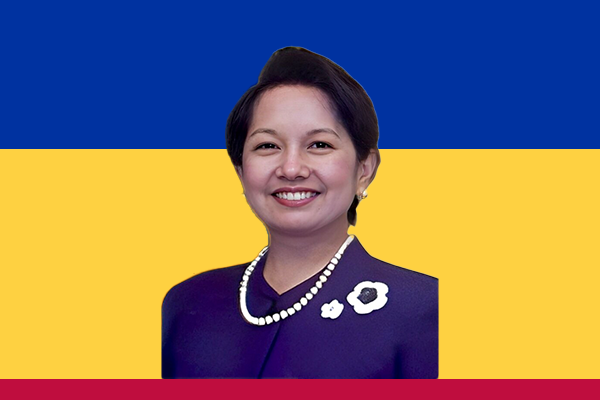
Gloria Macapagal Arroyo
In Office: 30 June 1998 – 20 January 2001
Political Party: Lakas
Home State: Ermita
Lifespan: born 1947
Country: Philippines
Image credits available here.
Early Life and Education
Gloria Macapagal Arroyo was born on April 5, 1947, in San Juan, Rizal, Philippines. She grew up in a politically influential family as the daughter of former President Diosdado Macapagal. From a young age, she observed her father’s dedication to public service, which inspired her own political aspirations. Arroyo attended Assumption College for her elementary and secondary education. She later earned her bachelor’s degree in Economics from Georgetown University in Washington, D.C., where she studied alongside future U.S. President Bill Clinton. Her strong academic background in economics shaped her analytical and reform-oriented mindset.
Academic and Professional Career
Before entering politics, Arroyo worked as a professor of economics at Ateneo de Manila University and the University of the Philippines. She inspired students with her deep understanding of fiscal policy, development, and governance. Her academic career helped her develop a solid reputation as an expert in economic management. The government later recognized her expertise and appointed her to several advisory roles, which allowed her to contribute directly to national policy discussions.
Entry into Politics
Arroyo entered politics in 1987 when President Corazon Aquino appointed her as Undersecretary of Trade and Industry. In this role, she promoted investments and supported export-oriented businesses. Her efficiency and competence gained her public recognition. In 1992, she successfully ran for the Senate, where she sponsored and authored key legislation on economic reform, trade liberalization, and social development. Her performance in the Senate strengthened her position as one of the country’s most capable leaders.
Election as Vice-President
In 1998, Arroyo ran for Vice-President under the Laban ng Makabayang Masang Pilipino coalition. She won by a wide margin, demonstrating her popularity and credibility among Filipino voters. As Vice-President, she also served as Secretary of Social Welfare and Development. She launched programs to reduce poverty, improve social services, and empower marginalized communities. Arroyo emphasized efficient governance and transparency in handling public funds.
Presidency After Estrada’s Resignation
When President Joseph Estrada faced corruption charges and mass protests in 2001, he resigned from office. Arroyo, as Vice-President, assumed the presidency in accordance with the constitution. Her rise to power marked a critical moment in Philippine history. As President, she focused on restoring stability and confidence in the government. She introduced fiscal reforms, promoted economic growth, and pursued foreign investment to strengthen the economy.
Economic and Political Reforms
President Arroyo implemented policies that stabilized the Philippine economy. She strengthened the banking sector, modernized infrastructure, and improved tax collection systems. She also launched the “Strong Republic” program to promote good governance, law enforcement, and national security. Her administration invested in education, health care, and rural development to reduce poverty. Despite facing political challenges, she remained firm in her vision of economic self-reliance and social progress.
Challenges and Controversies
Arroyo’s presidency faced multiple controversies, including allegations of electoral fraud and corruption. Critics accused her of using her power to maintain political control. However, she defended her administration’s actions as necessary for national stability. She focused on implementing programs that benefited the majority of Filipinos, particularly in the areas of agriculture, public health, and disaster response. Her ability to navigate crises reflected her resilience and strategic political skills.
Legacy and Later Career
After serving as president, Arroyo continued to play an active role in politics. She was elected to the House of Representatives in 2010, representing the 2nd District of Pampanga. In 2018, she became the first female Speaker of the House of Representatives, once again breaking political barriers. Her leadership emphasized experience, adaptability, and a strong commitment to public service.
Conclusion
Vice-President Gloria Macapagal Arroyo left a lasting mark on the Philippines through her economic expertise and political resilience. She proved that determination and knowledge could overcome adversity. Her career reflected both the challenges and triumphs of modern Philippine politics. As a leader, educator, and policymaker, Arroyo’s influence continues to shape the nation’s political and economic landscape.