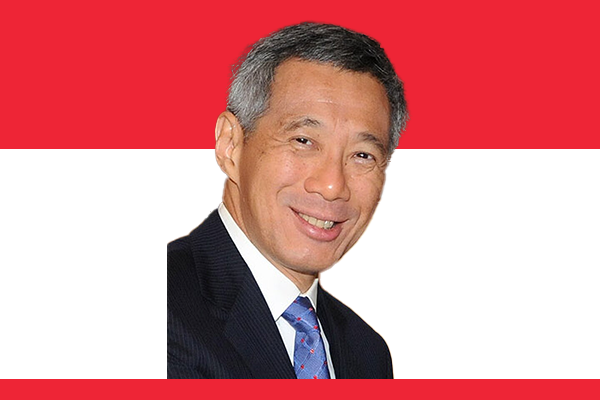
Early Life and Education
Lee Hsien Loong was born on 10 February 1952 in Singapore. He is the eldest son of Lee Kuan Yew, Singapore’s founding Prime Minister. From an early age, he was exposed to public service and leadership values. Academically gifted, he studied mathematics at the University of Cambridge, where he graduated with first-class honors. He later earned a master’s degree in public administration from Harvard University, strengthening his understanding of governance and policy-making.
Military Career and Entry into Politics
Before entering politics, Lee Hsien Loong built a strong career in the Singapore Armed Forces. He rose to the rank of Brigadier-General, becoming one of the youngest officers to achieve this position. His military experience gave him deep insight into national security and strategic planning. In 1984, he entered politics and was elected as a Member of Parliament, quickly gaining recognition as a capable and disciplined leader.
Appointment as Deputy Prime Minister
In 1990, Lee Hsien Loong was appointed Deputy Prime Minister, coinciding with the leadership transition from Lee Kuan Yew to Goh Chok Tong as Prime Minister. This period was critical for Singapore, as it required balancing continuity with renewal. As Deputy Prime Minister, Lee worked closely with the Prime Minister and senior ministers to guide the country through economic changes and regional developments.
Key Responsibilities and Contributions
As Deputy Prime Minister, Lee Hsien Loong held several important portfolios, including Finance, Defense, and Trade and Industry at different times. He played a major role in strengthening Singapore’s financial systems, promoting economic competitiveness, and encouraging technological advancement. During regional financial challenges, his policies emphasized fiscal discipline, long-term planning, and resilience.
In defense and security matters, he contributed to modernizing the armed forces and reinforcing Singapore’s strategic readiness. His leadership helped ensure that Singapore remained secure and stable in a rapidly changing regional environment.
Leadership Style and Vision
Lee Hsien Loong’s leadership as Deputy Prime Minister was marked by pragmatism, analytical thinking, and a focus on results. He was known for his ability to address complex issues with clarity and calmness. His approach emphasized meritocracy, clean governance, and careful long-term planning, values that have been central to Singapore’s success.
Path to the Prime Ministership
After serving as Deputy Prime Minister for 14 years, Lee Hsien Loong succeeded Goh Chok Tong as Prime Minister in 2004. His long experience in government, particularly in the role of Deputy Prime Minister, ensured a smooth and stable leadership transition. The groundwork he laid during this period significantly influenced his later policies as Prime Minister.
Conclusion
Lee Hsien Loong’s tenure as Deputy Prime Minister was a vital chapter in Singapore’s political history. Through his contributions to economic policy, national security, and governance, he helped strengthen the nation and prepare it for future challenges. His service during these years established him as a capable leader and paved the way for his eventual role as Prime Minister of Singapore.