Megawati Sukarnoputri
In Office: 21 October 1999 – 23 July 2001
Political Party: Indonesian Struggle
Home State: Yogyakarta
Lifespan: born 1947
Country: Indonesia
Image credits available here.
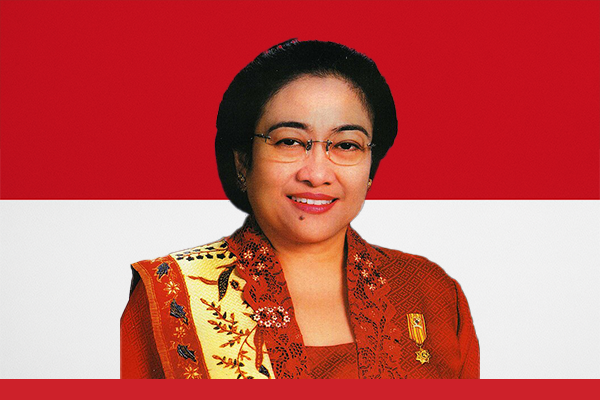
Early Life and Education
Megawati Sukarnoputri was born on January 23, 1947, in Yogyakarta, Indonesia. She grew up in a politically influential family as the daughter of Indonesia’s first president, Sukarno. Her family environment instilled in her a deep sense of nationalism and civic responsibility. Megawati attended Padjadjaran University, where she studied agriculture, but she soon gravitated toward politics, inspired by her father’s vision for Indonesia.
Entry into Politics
Megawati entered politics during a period of significant national change. In the late 1980s, she joined the Indonesian Democratic Party (PDI), quickly rising through its ranks due to her charisma and dedication. She became the chairwoman of PDI in the early 1990s. Megawati led her party with a focus on democracy, social justice, and the empowerment of marginalized communities. Her leadership challenged the prevailing political norms under the Suharto regime.
Rise to National Prominence
By the late 1990s, Megawati had gained national prominence as Indonesia experienced political upheaval. She actively participated in the Reformasi movement, which sought to end authoritarian rule and promote democratic governance. In 1999, she led her party to win the largest share of votes in the legislative elections. Though the presidency initially eluded her due to political compromises, she solidified her reputation as a resilient and visionary leader.
Serving as Vice-President
Megawati Sukarnoputri assumed the office of Vice-President of Indonesia in 1999, serving under President Abdurrahman Wahid. As vice-president, she actively advised on policy matters and represented Indonesia in numerous diplomatic engagements. She promoted policies that emphasized education, women’s empowerment, and poverty reduction. Her pragmatic approach and ability to bridge political divides earned her respect across party lines.
Presidency and Political Achievements
Following her tenure as vice-president, Megawati ascended to the presidency in 2001 after President Wahid was removed from office. She became Indonesia’s first female president, continuing her advocacy for democratic governance, economic reform, and national unity. She strengthened Indonesia’s democratic institutions, oversaw infrastructure development, and addressed social inequality. Megawati’s leadership also enhanced Indonesia’s standing in regional and global forums.
Challenges and Leadership Style
Megawati faced significant challenges during her political career, including internal party disputes, economic crises, and public scrutiny. She navigated these challenges with a calm and determined approach. Her leadership style combined pragmatism with a commitment to principle. She prioritized national stability while promoting reforms that would lay the groundwork for future progress.
Legacy and Influence
Megawati Sukarnoputri remains a symbol of resilience and female leadership in Indonesia. She broke barriers as the first woman to hold the vice-presidency and presidency, inspiring countless young Indonesians to participate in public service. Through her political career, she strengthened democratic institutions, promoted social welfare, and positioned Indonesia as a more inclusive and forward-looking nation.
Continuing Role in Politics
Even after completing her presidential term, Megawati continues to influence Indonesian politics as the leader of the Indonesian Democratic Party of Struggle (PDI-P). She mentors emerging leaders, guides party strategies, and advocates for policies aligned with her vision of national progress and social justice. Her ongoing involvement ensures that her experience and insight continue to shape the country’s future.