Establishment of the Presidency
China formally created the office of the President under its 1954 Constitution. The President acts as the head of state and represents China in foreign affairs, while actual policymaking authority rests with the Communist Party’s General Secretary. Over time, the role grew more influential as presidents began to consolidate political and military power.
Notable Presidents of China
The first President, Mao Zedong (1893–1976), shaped modern China through revolutionary leadership and Communist ideology. He laid the foundation of the PRC in 1949 and remained a central figure in politics.
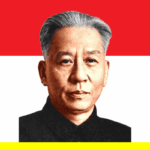
Liu Shaoqi (1898–1969) followed, focusing on economic reforms, but he fell victim to the Cultural Revolution.
Dong Biwu and Song Qingling briefly acted as heads of state during transitional periods.
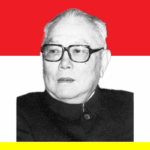
Li Xiannian (1909–1992) and Yang Shangkun (1907–1998) restored stability in the post-Mao era, managing both reform and modernization.
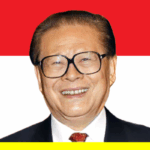
Jiang Zemin (1926–2022) expanded China’s global influence during his presidency (1993–2003). He balanced economic reforms with strong Party leadership.
Hu Jintao (1942– ), president from 2003 to 2013, promoted the “Scientific Outlook on Development,” emphasizing balanced economic growth and social harmony.
Currently, Xi Jinping (1953– ) serves as President since 2013. He has centralized power, advanced the Belt and Road Initiative, strengthened military modernization, and positioned China as a global power. In 2018, term limits were abolished, allowing him to continue indefinitely.
Conclusion
List of President of China The Presidents of China have played crucial roles in shaping the nation’s path from revolution to modernization. Their leadership reflects the country’s transformation into a global powerhouse, with the presidency symbolizing both political authority and China’s international vision.