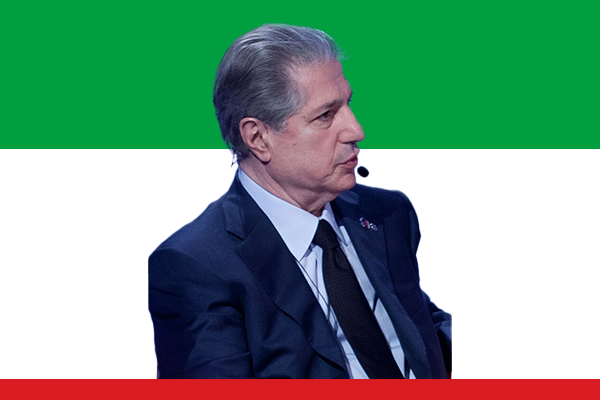
Early Life and Background
Amine Gemayel was born on January 22, 1942, in Bikfaya, Lebanon, into a prominent Maronite Christian family deeply involved in Lebanese politics. He is the son of Pierre Gemayel, the founder of the Kataeb Party (also known as the Phalange Party), a major political force in Lebanon. Growing up in a politically active environment, Amine was exposed early to the complexities of Lebanese governance and sectarian balance.
He pursued his education in law at Saint Joseph University in Beirut and later became a practicing lawyer. Before entering high-level politics, Gemayel was known for his moderate political views compared to some members of his party. He also played an active role in sports administration, serving as president of the Lebanese Football Federation, reflecting his broader engagement in civil society.
Rise to the Presidency
Amine Gemayel’s political career gained momentum when he was elected to the Lebanese Parliament in 1970, representing the Metn district. He became increasingly involved in party affairs and national politics during the Lebanese Civil War, which began in 1975 and deeply divided the country along sectarian lines.
In 1982, Lebanon faced a dramatic turning point. His younger brother, Bashir Gemayel, had been elected president but was assassinated before taking office. In the aftermath of this tragedy, Amine Gemayel was elected President of Lebanon on September 23, 1982. His election came during a period of extreme instability, foreign military presence, and internal conflict.
Presidency During Civil War
Amine Gemayel’s presidency lasted from 1982 to 1988, one of the most difficult periods in Lebanon’s modern history. The country was deeply fragmented, with multiple militias controlling different regions, and foreign forces—including Israel and Syria—maintaining significant influence.
One of the early challenges of his presidency was negotiating the withdrawal of foreign troops. In 1983, his government signed an agreement with Israel aimed at securing Israeli withdrawal from southern Lebanon. However, the agreement faced strong opposition from Syria and various Lebanese factions, and it ultimately collapsed.
Gemayel also struggled to unify the Lebanese Armed Forces and restore state authority. His administration attempted to strengthen central government institutions, but ongoing violence and political divisions limited progress. In 1984, intense fighting in Beirut further weakened his position, forcing political compromises and cabinet reshuffles.
Throughout his term, Gemayel sought international support, particularly from the United States and European nations, to stabilize Lebanon. However, events such as the 1983 bombing of the U.S. Marine barracks in Beirut highlighted the volatile environment and complicated foreign involvement.
Political Approach and Challenges
Amine Gemayel was often described as pragmatic and conciliatory. Unlike some hardline leaders, he attempted to engage in dialogue with different political and sectarian groups. However, Lebanon’s deeply entrenched divisions made national reconciliation extremely challenging.
One of the most significant issues during his presidency was the question of power-sharing among Lebanon’s religious communities. The civil war exposed weaknesses in the existing political system, which was based on a delicate sectarian balance. Although major reforms would later come with the 1989 Taif Agreement (after his presidency), Gemayel’s term set the stage for discussions on restructuring governance.
As his mandate neared its end in 1988, political deadlock prevented the election of a successor. In a controversial move, Gemayel appointed a military government headed by General Michel Aoun, leading to further constitutional and political disputes.
Life After the Presidency
After leaving office, Amine Gemayel spent years in political opposition and occasional exile due to ongoing instability. He remained active in Lebanese politics, continuing to lead the Kataeb Party and participating in parliamentary activities. Over time, he became a senior statesman figure within Lebanon’s political landscape.
Despite criticism over the limited achievements of his presidency, many observers acknowledge that Gemayel governed during extraordinarily difficult circumstances. His tenure reflected the broader struggles of Lebanon as it sought to survive civil war, foreign intervention, and internal fragmentation.
Legacy
President Amine Gemayel’s legacy is closely tied to one of Lebanon’s most turbulent eras. While he was unable to end the civil war during his time in office, he attempted to preserve state institutions and promote dialogue amid chaos. His leadership represents a chapter in Lebanon’s complex political history, marked by resilience, compromise, and the enduring challenge of national unity.