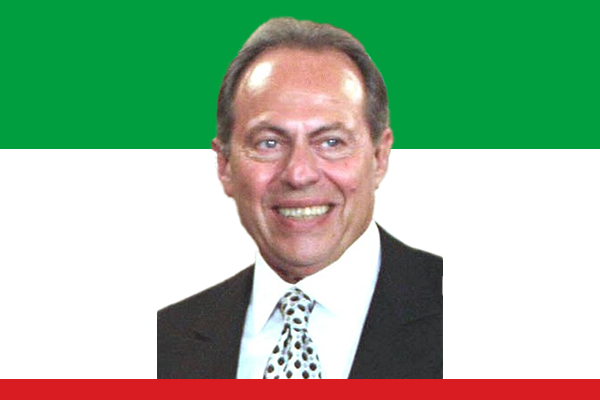
President Émile Lahoud
Émile Jamil Lahoud served as the President of Lebanon from 1998 to 2007, playing a significant role during a complex and transformative period in the country’s modern history. Born on January 12, 1936, in Baabdat, Lebanon, Lahoud came from a prominent Maronite Christian family. His father, General Jamil Lahoud, was a respected military figure and former minister, which influenced Émile Lahoud’s early interest in public service and national defense.
Lahoud pursued a military career and joined the Lebanese Army in 1956 as a naval cadet. He received further training in the United Kingdom and the United States, gaining professional experience that shaped his disciplined leadership style. Over the years, he rose steadily through the ranks and earned a reputation for integrity and organizational skill. In 1989, at the end of Lebanon’s long civil war, he was appointed Commander of the Lebanese Armed Forces. During his tenure as army chief, Lahoud focused on rebuilding and unifying the military institution, which had been fragmented along sectarian lines during the conflict. His efforts to professionalize the army and maintain internal stability enhanced his national profile.
In 1998, the Lebanese Parliament elected Émile Lahoud as President of the Republic. According to Lebanon’s constitutional system, the president must be a Maronite Christian, the prime minister a Sunni Muslim, and the speaker of parliament a Shia Muslim. Lahoud succeeded President Elias Hrawi and entered office with strong backing from Syria, which maintained a significant political and military presence in Lebanon at the time. His presidency reflected the political realities of the era, as Syria exerted considerable influence over Lebanese affairs.
During his time in office, Lahoud emphasized state authority, anti-corruption measures, and strengthening public institutions. He sought to reinforce the role of the presidency and maintain security and stability. However, his term was marked by political tensions, particularly between pro-Syrian and anti-Syrian factions within Lebanon. In 2004, Lebanon’s parliament amended the constitution to extend Lahoud’s term by three years, a decision that sparked controversy and domestic opposition. Many critics viewed the extension as a result of Syrian pressure, which intensified political divisions within the country.
The political climate became even more volatile in 2005 following the assassination of former Prime Minister Rafik Hariri. The assassination led to widespread protests known as the Cedar Revolution, demanding the withdrawal of Syrian forces from Lebanon and greater national sovereignty. Under international and domestic pressure, Syrian troops withdrew from Lebanon in April 2005, ending nearly three decades of military presence. Although Lahoud remained in office until the end of his term in 2007, his authority was increasingly challenged by political rivals who called for his resignation.
Throughout his presidency, Lahoud maintained a firm stance on Lebanon’s relationship with Israel and supported the role of resistance movements in confronting Israeli occupation, particularly in southern Lebanon. His views aligned with certain political groups, but also drew criticism from others who favored different approaches to national defense and foreign policy.
After leaving office in November 2007, Émile Lahoud withdrew largely from active political life, though he continued to comment occasionally on national issues. His presidency remains a subject of debate among historians and political analysts. Supporters credit him with preserving stability during turbulent times and strengthening the Lebanese Armed Forces. Critics argue that his close alignment with Syrian interests limited Lebanon’s political independence and deepened internal divisions.
Émile Lahoud’s legacy reflects the broader challenges of Lebanese politics, including sectarian balance, foreign influence, and the struggle for sovereignty. His career as a military commander and head of state places him among the notable figures who shaped Lebanon’s post-civil war era.