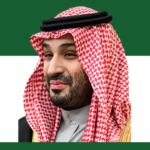
Vice Presidents of Saudi Arabia

Saudi Arabia does not have an official position called “Vice President of the Kingdom” in its national constitution or system of government. Unlike some republics (for example the United States, India, or many African and Asian countries), the Kingdom of Saudi Arabia is an absolute monarchy where the King is the head of state and government, and there is no separate vice‑presidential office at the national level.

LIST OF VICE-PRESIDENTS OF SAUDI ARABIA

="timeline-item"
Khalid

Prince Khalid bin Salman bin Abdulaziz Al Saud is a prominent member of the Saudi royal family and the son of King Salman. Born in 1988, he has held several key positions in the Saudi government, including serving as the Vice Minister of Defense and as the Saudi Ambassador to the United States. Prince Khalid is known for his diplomatic engagement, strategic defense roles, and efforts to strengthen Saudi Arabia’s international relations. He represents the younger generation of leadership in the Kingdom.

="timeline-item"
Fahd

King Fahd of Saudi Arabia (1921–2005) was the fifth ruler of the Kingdom, ascending the throne in 1982 after the death of his half-brother King Khalid. He is known for modernizing the country’s infrastructure, education, and healthcare, as well as implementing the Basic Law of Governance in 1992, which codified the roles of the monarchy. Fahd played a key role in international politics, particularly during the Gulf War, hosting coalition forces. His reign strengthened Saudi Arabia’s regional influence and modernization efforts.

="timeline-item"
Abdullah

King Abdullah bin Abdulaziz Al Saud (1924–2015) was the sixth King of Saudi Arabia, ruling from 2005 until his death in 2015. Known for his cautious modernization efforts, he implemented economic, educational, and social reforms while maintaining the Kingdom’s conservative foundations. King Abdullah strengthened international relations, promoted interfaith dialogue, and invested heavily in infrastructure and development projects. He was also instrumental in expanding the role of women in education and public life. His reign balanced tradition with measured progress.

="timeline-item"
Abdulaziz

King Abdullah bin Abdulaziz Al Saud (1924–2015) was the sixth king of Saudi Arabia, ruling from 2005 until his death in 2015. He was known for cautious modernization and incremental reforms, including expanding women’s education, promoting infrastructure projects, and encouraging economic diversification beyond oil. Abdullah also played a significant role in foreign diplomacy, mediating regional conflicts and strengthening Saudi Arabia’s international relations. His reign balanced tradition with modernization, leaving a lasting impact on the Kingdom’s social and political landscape.

="timeline-item"
Nayef bin Abdulaziz

Prince Nayef bin Abdulaziz Al Saud (1934–2012) was a prominent Saudi royal and politician who served as Crown Prince and Deputy Prime Minister of Saudi Arabia from 2011 until his death. He was also the long-time Interior Minister (1975–2012), overseeing internal security, counter-terrorism, and law enforcement. Known for his conservative stance and strong influence within the royal family, Prince Nayef played a key role in maintaining stability in the Kingdom. He was succeeded by Prince Salman as Crown Prince.

="timeline-item"
Salman

King Salman bin Abdulaziz Al Saud is the current King of Saudi Arabia, having ascended the throne on January 23, 2015, following the death of his half-brother, King Abdullah. Born on December 31, 1935, in Riyadh, he previously served as the Governor of Riyadh Province for nearly 50 years, modernizing the city’s infrastructure and administration. As King, Salman has overseen major social and economic reforms, including Vision 2030, aimed at diversifying Saudi Arabia’s economy and reducing its dependence on oil, while strengthening the Kingdom’s regional and international influence.

="timeline-item"
Muqrin bin Abdulaziz

Prince Muqrin bin Abdulaziz Al Saud (born 1945) is a senior member of the Saudi royal family and the youngest son of King Abdulaziz, the founder of modern Saudi Arabia. He briefly served as Crown Prince of Saudi Arabia in 2015 before being replaced by Prince Mohammed bin Nayef. Prince Muqrin has also held key positions such as Director General of Saudi Intelligence and governor of Ha’il province. Known for his diplomatic experience, he has played an advisory role in the royal court.

="timeline-item"
Muhammad bin Nayef

Muhammad bin Nayef is a prominent Saudi royal and politician, born in 1959. He served as Crown Prince of Saudi Arabia from 2015 to 2017 and was also the Minister of Interior from 2012 to 2017. Known for his role in counter-terrorism efforts, he helped modernize Saudi Arabia’s security apparatus and oversaw anti-terror campaigns. In 2017, he was replaced as Crown Prince by Mohammed bin Salman and has since been under house detention, reflecting shifts in royal succession and power dynamics.

="timeline-item"
Mohammed bin Salman Al Saud

Mohammed bin Salman Al Saud is the Crown Prince of Saudi Arabia, born on August 31, 1985. He is the son of King Salman bin Abdulaziz Al Saud and plays a central role in shaping the Kingdom’s political and economic policies. Known for his ambitious Vision 2030 plan, he aims to diversify Saudi Arabia’s economy beyond oil. Mohammed bin Salman also oversees defense, foreign policy initiatives, and social reforms, making him the most influential figure after the King.

Crown Prince — Closest Equivalent to Vice President

The Crown Prince of Saudi Arabia is the closest functional equivalent to a vice‑presidential role (but not a vice president by title). He is heir to the throne and often chairs key councils and ministries. Notable Crown Princes include:

Mohammed bin Salman – Current Crown Prince and Minister of Defense. Widely seen as the de facto leader in policymaking and reforms.

Muhammad bin Nayef – Former Crown Prince and deputy prime minister before being replaced in 2017.

Muqrin bin Abdulaziz Al Saud – Served briefly as Crown Prince in 2015 before being replaced.

These figures are sometimes mistakenly cited in online lists as “Vice Presidents” of Saudi Arabia; in reality, they held or hold Crown Prince or Deputy Crown Prince positions — not a constitutionally defined vice presidency.

 Saudi Nationals in Vice President Titles Abroad or in Organizations

While Saudi Arabia does not have a vice president position domestically, several Saudis have held vice‑presidential or deputy leadership roles in international bodies or organisations. These are not state offices of Saudi Arabia, but they reflect global engagement:

Dr. Abdul Aziz Al‑Wasel – Elected Vice President of the 80th session of the United Nations General Assembly (representing the Asian Group). His election reflects Saudi diplomatic influence at the UN.

Hassan bin Moejeb Al‑Huwaizi – Appointed as Vice President of the Union of Arab Chambers (regional economic body).

Saudis have also been elected vice presidents in various professional and sectoral international forums (e.g., space or scientific federations), but again not as Vice President of Saudi Arabia itself.
Back to top of page