SLOVAKIA
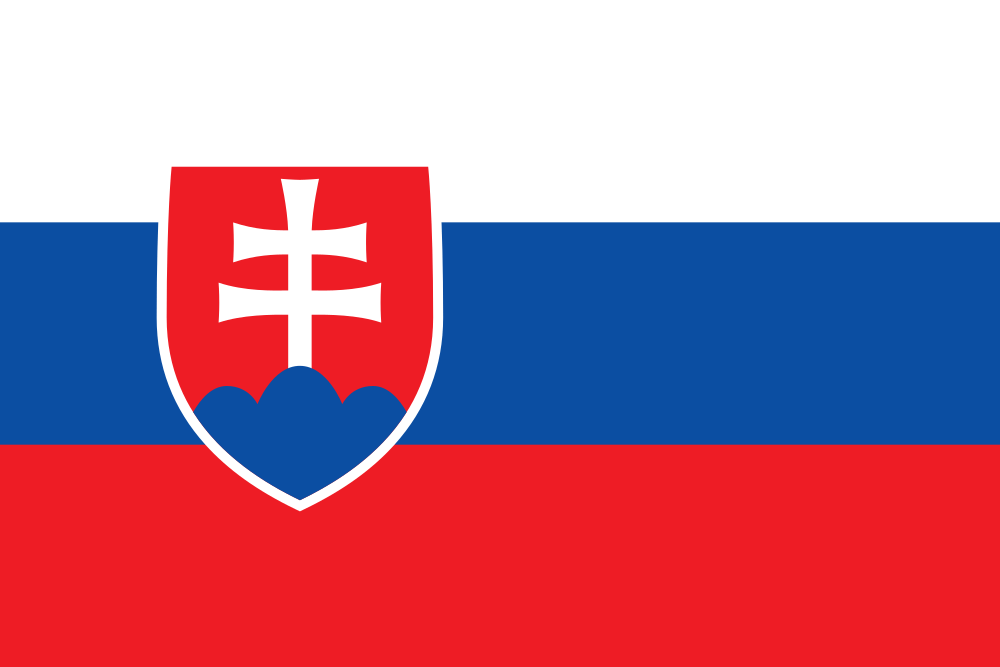
Slovakia flag
The national flag of Slovakia consists of three horizontal stripes: white at the top, blue in the middle, and red at the bottom. These are traditional Pan-Slavic colors representing the shared heritage of Slavic nations. On the left side of the flag is Slovakia’s coat of arms, featuring a white double cross standing on three blue hills against a red shield. Officially adopted on September 3, 1992, the flag symbolizes the country’s history, identity, independence, and national pride.
Slovakia
Slovakia, officially known as the Slovak Republic, is a landlocked country located in Central Europe. It shares borders with Poland, Czech Republic, Austria, Hungary, and Ukraine. The country covers an area of about 49,000 square kilometres and has a population of more than 5.4 million people. Its capital and largest city is Bratislava. Slovakia became an independent nation on 1 January 1993 after the peaceful dissolution of Czechoslovakia
Geography
Slovakia is known for its beautiful natural landscapes. The country is dominated by the Carpathian Mountains, including the famous High Tatras, which contain some of the highest peaks in Central Europe. Rivers such as the Danube, Váh, and Hron flow through the country and support agriculture, transportation, and tourism. Forests cover a large portion of the land, providing habitats for many species of wildlife.
History
The territory of present-day Slovakia has a rich history dating back to ancient times. It was part of Great Moravia in the ninth century and later became part of the Kingdom of Hungary for many centuries. After the end of the First World War in 1918, Slovakia joined with the Czech lands to form Czechoslovakia. Following political changes in Europe and the peaceful division of Czechoslovakia, Slovakia emerged as an independent state in 1993.
Government and Economy
Slovakia is a parliamentary democratic republic. The president serves as the head of state, while the prime minister leads the government. The country joined the European Union in 2004, became part of the Schengen Area in 2007, and adopted the euro as its currency in 2009. These steps helped strengthen its economy and international connections. Major industries include automobile manufacturing, engineering, electronics, and services.
Culture and Tourism
Slovak culture reflects a blend of Slavic traditions, folk music, dance, and craftsmanship. Traditional festivals, wooden churches, medieval castles, and historic towns attract visitors from around the world. Popular tourist destinations include Bratislava Castle, the High Tatras, and numerous caves and national parks. Slovak cuisine features dishes such as bryndzové halušky, a traditional potato dumpling dish with sheep cheese.
Conclusion
Slovakia is a modern European nation with a rich history, stunning mountain scenery, and vibrant cultural traditions. Its strategic location, strong economy, and natural beauty make it an important and attractive country in Central Europe.