CROATIA
Croatia flag
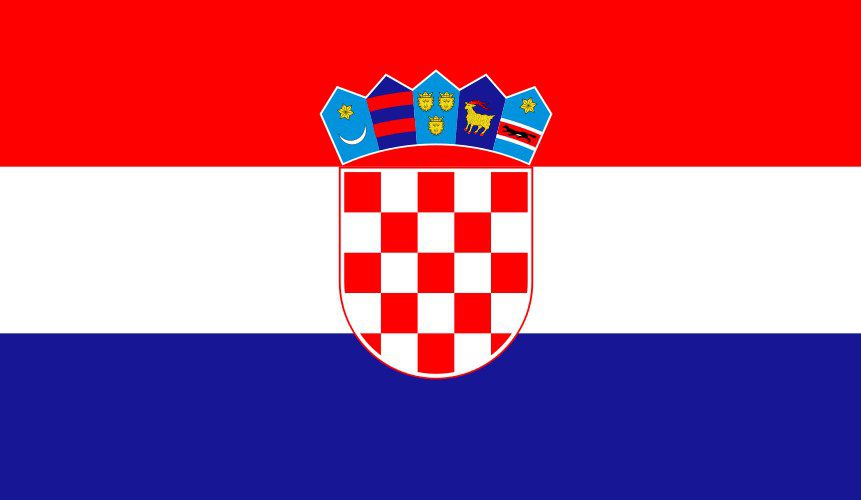
The flag of Croatia features three equal horizontal stripes of red, white, and blue, with the Croatian coat of arms centered on the flag. The red stripe symbolizes bravery, the white represents peace and honesty, and the blue stands for freedom and loyalty. Above the shield is a crown made of five smaller historical shields representing different regions of Croatia. The flag was officially adopted on 21 December 1990 and reflects the country’s rich history, culture, and national pride.
Croatia
Croatia is a beautiful country located in Southeast Europe along the eastern coast of the Adriatic Sea. It shares borders with Slovenia, Hungary, Serbia, Bosnia and Herzegovina, and Montenegro. Croatia is well known for its stunning coastline, historic cities, crystal-clear waters, and rich cultural heritage. The country’s capital and largest city is Zagreb. Croatia covers an area of about 56,594 square kilometers and has a population of around 3.8 million people. It is one of Europe’s most popular tourist destinations.
History
Croatia has a long and fascinating history that dates back thousands of years. During ancient times, the region was inhabited by the Illyrians before becoming part of the Roman Empire. Later, Croatia developed as a medieval kingdom and eventually entered a union with Hungary. Over the centuries, parts of the country came under the rule of the Ottoman Empire and the Habsburg Monarchy. After the breakup of Yugoslavia, Croatia declared independence on June 25, 1991. Following a period of conflict, the country gained international recognition and has since become a peaceful and prosperous nation.
Geography and Climate
Croatia has a diverse landscape that includes mountains, forests, rivers, fertile plains, and over a thousand islands along the Adriatic coast. The Dinaric Alps stretch across much of the country. The coastal regions enjoy a Mediterranean climate with warm summers and mild winters, while inland areas experience a continental climate with colder winters and warmer summers.
Economy
Croatia has a developing economy based on tourism, manufacturing, agriculture, and services. Tourism is one of the country’s largest industries, attracting millions of visitors each year who come to enjoy its beaches, national parks, and historic towns. Croatia also produces wine, olive oil, fruits, and vegetables. Since joining the European Union in 2013, the country has experienced increased trade and investment opportunities.
Culture and Tourism
Croatian culture reflects a blend of Central European and Mediterranean traditions. The country is famous for its folk music, festivals, delicious seafood, and traditional dishes. Popular attractions include Plitvice Lakes National Park, Dubrovnik Old Town, and the historic city of Split. Croatia has also become well known as a filming location for several international television series and movies.
Conclusion
Croatia is a country rich in natural beauty, history, and culture. Its breathtaking coastline, ancient monuments, and welcoming people make it one of Europe’s most attractive destinations. With a strong tourism industry, growing economy, and membership in the European Union, Croatia continues to develop while preserving its unique heritage and traditions.