PRESIDENTS OF EGYPT
Presidents of Egypt: A Historical Overview
Since Egypt became a republic in 1953, following the end of the monarchy, it has had several presidents, each playing a major role in shaping the country’s modern history. The president is the head of state, commander-in-chief, and holds significant executive power.
LIST OF PRESIDENTS OF EGYPT





Role of the President of Egypt
The President of Egypt serves as the head of state, chief executive, and supreme commander of the armed forces. Although Egypt has both a prime minister and a parliament, the president exercises significant power, especially in foreign policy, national security, and strategic decisions.
Key Duties and Powers (In Active Voice):
The president appoints the Prime Minister and, based on the Prime Minister’s recommendations, appoints and dismisses ministers.
- The president leads the executive branch and sets general state policy.
- The president commands the Armed Forces and has the authority to declare war with the approval of parliament.
- The president represents Egypt internationally, negotiates treaties, and ratifies them, subject to parliamentary approval.
- Under certain conditions, the president issues laws, especially during a state of emergency.
- The president can dissolve the House of Representatives under constitutional guidelines.
- The president has the power to pardon prisoners or commute sentences.
- The president can appoint vice presidents, although the position remains optional and has not always been filled.
The 2014 Constitution, which lawmakers amended in 2019, expanded presidential powers but also introduced term limits (6 years per term, maximum of 2 terms). However, the 2019 amendment enabled President Abdel Fattah el-Sisi to extend his time in office under transitional provisions.
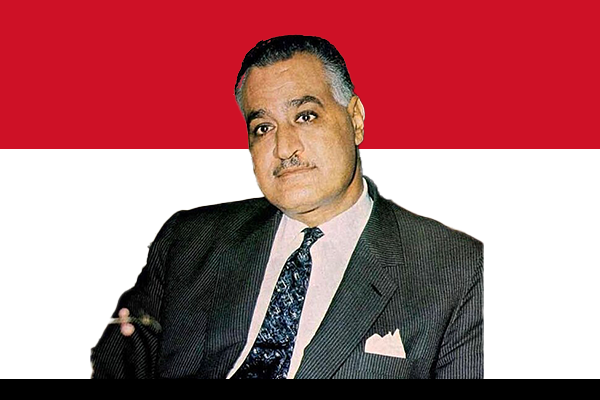
Gamal Abdel Nasser (1954–1970)
Nasser emerged as one of the most influential Arab leaders of the 20th century. After leading the 1952 revolution, he nationalized the Suez Canal in 1956, directly challenging Britain and France. He introduced socialist policies, implemented land reforms, and strengthened Egypt’s ties with the Soviet Union. Domestically, he promoted Arab nationalism and pan-Arab unity, but also restricted political freedoms. Despite Egypt’s military defeat in the 1967 Six-Day War, many Egyptians admired Nasser for defying Western powers.
Anwar Sadat (1970–1981)
Anwar Sadat succeeded Nasser and redirected Egypt’s policies toward economic liberalization and Western alignment. He led the country in the 1973 October War against Israel, which restored national pride. In 1979, he signed the Camp David Accords, making Egypt the first Arab nation to recognize Israel. Although the global community praised Sadat and awarded him the Nobel Peace Prize, many Arabs and Egyptians criticized him. Extremists assassinated him during a military parade in 1981.
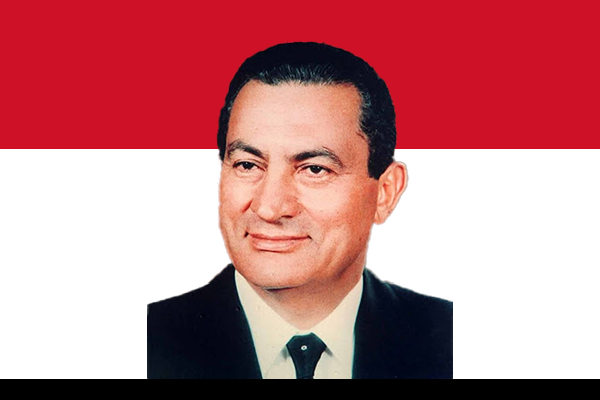
Hosni Mubarak (1981–2011)
Mubarak became president after Sadat’s assassination and ruled Egypt for nearly 30 years. His leadership brought stability and economic growth, but also strengthened authoritarian control. Western powers, especially the United States, supported Mubarak’s regime, while critics condemned human rights abuses and political repression. During the Arab Spring in 2011, massive public protests forced Mubarak to resign, ending his decades-long rule. His departure marked a major turning point in Egypt’s political history.
Mohamed Morsi (2012–2013)
Morsi won Egypt’s first democratic presidential election and represented the Muslim Brotherhood. His short presidency faced deep divisions, economic challenges, and accusations of centralizing power. In July 2013, after millions of Egyptians took to the streets to protest his rule, the military removed him from office. Authorities imprisoned him, and he died in 2019 during a court session.
Abdel Fattah el-Sisi (2014–Present)
Sisi, a former general and defense minister, rose to power after leading Morsi’s removal. Egyptians elected him president in 2014, and they re-elected him in 2018 and again in 2024, following constitutional amendments. His government focused on restoring stability, tightening security, and launching massive infrastructure projects—such as the New Administrative Capital and the expansion of the Suez Canal. Although Sisi gained support for modernizing the economy, human rights groups criticized his administration for suppressing free speech and limiting civil liberties.
Conclusion
Egypt’s presidency has evolved over decades, shifting from revolutionary ideals to authoritarian rule, brief democratic experimentation, and back to strong centralized leadership. Each president has shaped the nation’s future through war, peace, economic reform, and political control. The presidency remains the most powerful office in Egypt, giving its holder significant influence over both national affairs and regional geopolitics.