KUWAIT
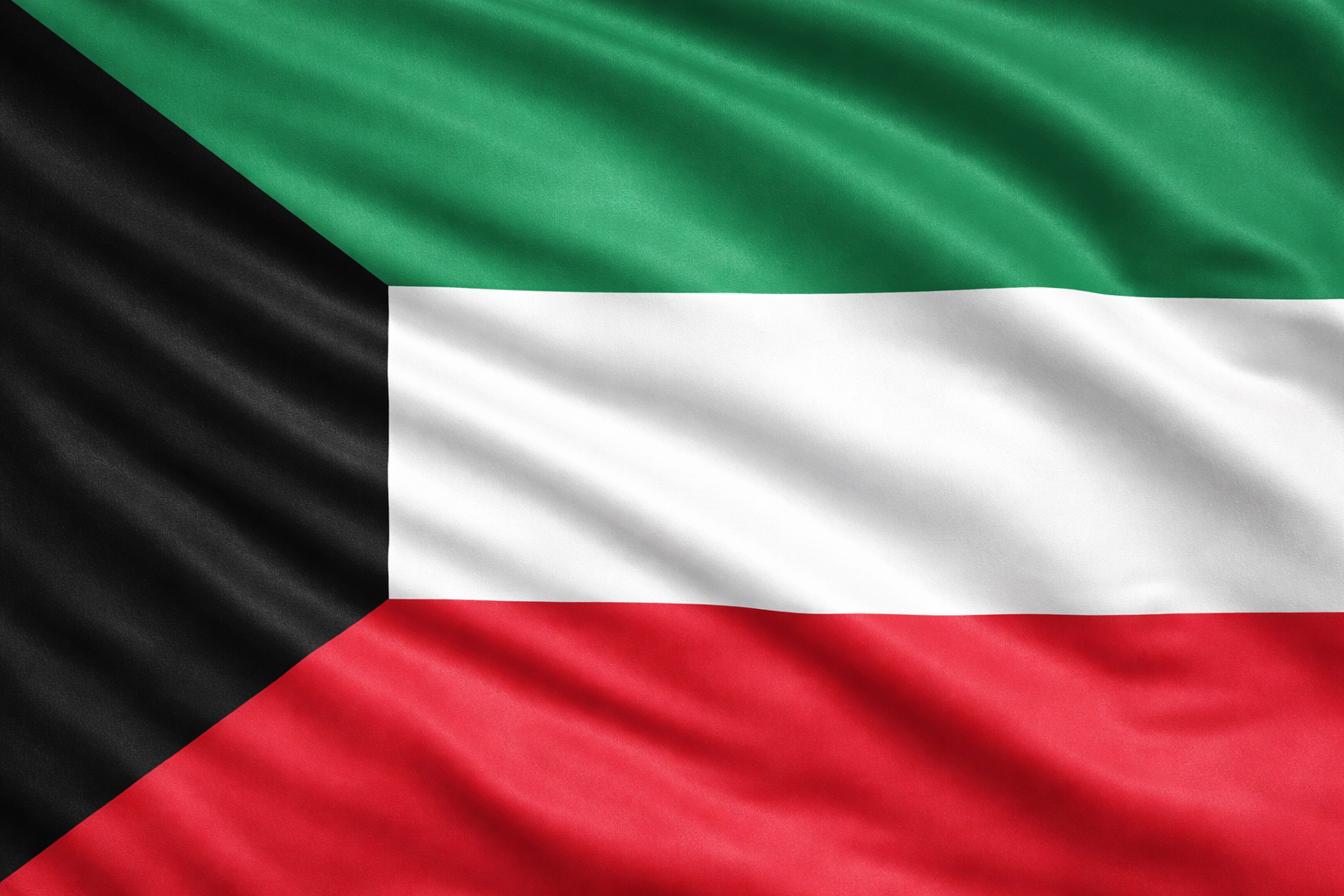
Kuwait Flag
The national flag of Kuwait was adopted on September 7, 1961, after independence. It has four colors: green, white, red, and black. Green represents fertile land, white stands for peace, red symbolizes bravery and sacrifices, and black shows the defeat of enemies. The flag has three horizontal stripes and a black trapezoid on the left. It reflects Kuwait’s Arab identity, history, unity, pride, and struggle for freedom and national sovereignty.
Overview
Introduction
Kuwait is a small but wealthy country located in the Middle East, at the northern edge of the Arabian Peninsula. It shares borders with Iraq to the north and west and Saudi Arabia to the south. To the east, Kuwait has a coastline along the Persian Gulf, which has played an important role in its trade and economy. Despite its small size, Kuwait is one of the richest countries in the world due to its large oil reserves.
Capital and Major Cities
The capital city of Kuwait is Kuwait City, which is the political, cultural, and economic center of the country. It is known for its modern buildings, shopping malls, and famous landmarks such as the Kuwait Towers. Most of the country’s population lives in and around this city. Other important urban areas include Hawalli, Farwaniya, and Ahmadi, which are known for residential and industrial activities.
History
Kuwait was established in the early 18th century by the Al Sabah family, which still rules the country today. In the past, Kuwait was an important trading and pearl diving center. In 1961, Kuwait gained independence from the United Kingdom. A major event in Kuwait’s history occurred in 1990 when Iraqi forces led by Saddam Hussein invaded Kuwait. This led to the Gulf War, and Kuwait was liberated in 1991 with the help of international forces.
Government and Politics
Kuwait is a constitutional monarchy ruled by an Emir from the Al Sabah family. The country also has an elected parliament called the National Assembly of Kuwait, which plays an important role in lawmaking. is considered one of the more politically open countries in the Gulf region because it allows elections and public debate.
Economy
Kuwait’s economy is mainly based on oil. It has about 6% of the world’s total oil reserves, making it one of the top oil-producing countries. Oil exports provide most of the government’s income. is also a member of Organization of the Petroleum Exporting Countries (OPEC). In recent years, the government has been trying to develop other sectors such as finance, trade, and tourism to reduce dependence on oil.
Culture and Society
culture is deeply influenced by Arab and Islamic traditions. Arabic is the official language, and Islam is the main religion. Traditional clothing is commonly worn, such as the dishdasha for men and abaya for women. Kuwait is also known for its hospitality, food, and cultural festivals.
Conclusion
a small but important country with a rich history, strong economy, and modern lifestyle. Its oil wealth, political system, and strategic location make it an influential nation in the Middle East.