Pratap Singh Shah
Coronation: 12 January 1775
Reign: 11 January 1775 – 17 November 1777
Home State: Gorkha
Lifespan: 1751–1777
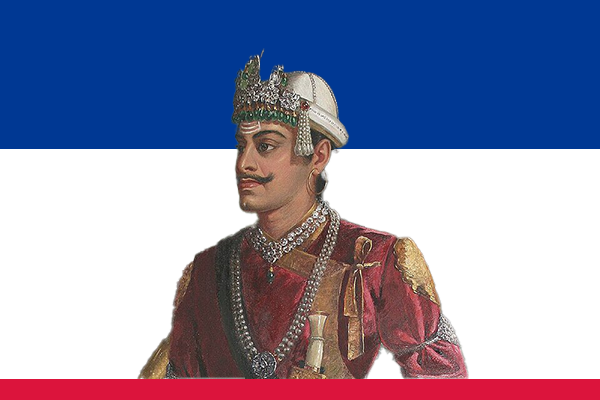
Early Life and Background
King Pratap Singh Shah was born in 1751 as the eldest son of King Prithvi Narayan Shah, the unifier of Nepal, and Queen Indra Kumari Devi. He grew up in a royal environment that valued leadership, strategy, and diplomacy. From a young age, he learned statecraft under the guidance of his father and senior court officials. His upbringing prepared him for future responsibilities as the heir to the throne.
Accession to the Throne
In January 1775, after the death of King Prithvi Narayan Shah, Pratap Singh Shah ascended the throne of unified Nepal. He inherited a growing kingdom that his father had united through military campaigns and strategic alliances. As king, Pratap Singh Shah maintained his father’s vision of national unity and stability.
Policies and Governance
Pratap Singh Shah focused on preserving and consolidating the territories his father had brought under one rule. Instead of initiating new military campaigns, he emphasized internal administration and the welfare of his people. He strengthened the central authority of the monarchy and ensured that regional leaders respected the new political structure.
The king also supported trade and economic development. He encouraged local industries and maintained diplomatic relations with neighboring states to secure Nepal’s borders. His reign reflected a balance between political stability and economic progress.
Personal Traits and Leadership Style
Known for his dignity and sense of duty, King Pratap Singh Shah upheld royal traditions while addressing the needs of his subjects. He valued harmony within his court and listened to the advice of trusted ministers. His leadership style combined caution with a commitment to national unity.
Untimely Death and Succession
King Pratap Singh Shah’s reign lasted only about two years. In 1777, at the age of 26, he died of smallpox, leaving the throne to his infant son, Rana Bahadur Shah. Despite his short rule, he ensured the continuation of his father’s unification legacy by maintaining peace and strengthening the governance system.
Legacy
Although his reign was brief, King Pratap Singh Shah contributed to Nepal’s consolidation as a unified nation. He preserved the achievements of his father and laid the foundation for future stability. Historians remember him as a cautious yet responsible ruler who guided Nepal through a crucial period in its early history.