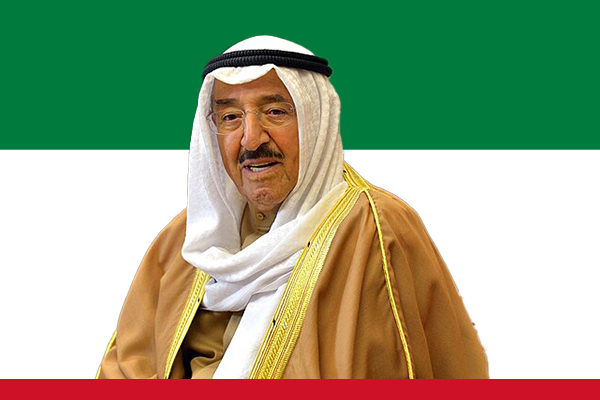
Sabah Al-Ahmad Al-Jaber Al-Sabah, widely known as Sheikh Sabah, was one of the most respected leaders in the Arab world and served as the Emir of Kuwait from 2006 until his passing in 2020. Born on June 16, 1929, into the ruling Al-Sabah family, he dedicated more than six decades of his life to public service. His leadership was marked by diplomacy, moderation, and a strong commitment to humanitarian causes, earning him international recognition and admiration.
Before becoming Emir, Sheikh Sabah played a central role in shaping Kuwait’s foreign policy. In 1963, he was appointed Minister of Foreign Affairs, a position he held for nearly 40 years. During this time, he established Kuwait as a significant diplomatic player in regional and international affairs. His efforts strengthened Kuwait’s relations with neighboring Gulf countries and global powers. He was instrumental in mediating conflicts and promoting dialogue, especially during times of tension in the Middle East.
One of the defining periods of his political career was the Iraqi invasion of Kuwait in 1990. Although he was not yet Emir at the time, Sheikh Sabah worked tirelessly on the international stage to rally support for Kuwait’s liberation. His diplomatic skills were crucial in building a coalition that ultimately restored Kuwait’s sovereignty in 1991. This experience reinforced his belief in multilateral cooperation and peaceful resolution of conflicts.
Sheikh Sabah became Emir in January 2006 following the death of Emir Sheikh Jaber Al-Ahmad Al-Sabah. As ruler, he focused on maintaining political stability and economic growth in Kuwait. He emphasized development projects aimed at diversifying the economy beyond oil dependence. Infrastructure expansion, education reform, and healthcare improvements were key priorities under his leadership. While Kuwait faced political challenges, including tensions between the government and parliament, Sheikh Sabah often acted as a unifying figure, seeking compromise and consensus.
Internationally, Sheikh Sabah earned the title “Humanitarian Leader” from the United Nations in 2014. His contributions to global humanitarian causes were significant. Kuwait, under his guidance, became a major donor of humanitarian aid, particularly during crises in Syria, Yemen, and other conflict-affected regions. He hosted several international donor conferences to mobilize funds for refugees and displaced populations. His efforts reflected a broader vision of responsibility toward the global community.
Regionally, Sheikh Sabah was known as a mediator. During the Gulf diplomatic crisis in 2017, when tensions arose between Qatar and several neighboring states, he attempted to bridge differences and maintain unity within the Gulf Cooperation Council (GCC). Although the crisis persisted for several years, his commitment to dialogue demonstrated his steady and balanced approach to regional politics.
Domestically, Sheikh Sabah supported gradual political reform. Kuwait is known for having one of the most active parliaments in the Gulf region, and he respected the constitutional framework established in 1962. While disagreements between the executive and legislative branches occasionally led to political deadlock, he consistently encouraged adherence to constitutional processes.
Sheikh Sabah passed away on September 29, 2020, at the age of 91. His death marked the end of an era in Kuwaiti politics. He was succeeded by his half-brother, Sheikh Nawaf Al-Ahmad Al-Jaber Al-Sabah. Across the Middle East and beyond, tributes poured in from world leaders who praised his wisdom, diplomacy, and humanitarian spirit.
The legacy of Sabah Al-Ahmad Al-Jaber Al-Sabah endures through Kuwait’s active diplomatic presence and strong humanitarian reputation. His life reflected dedication to service, belief in peaceful solutions, and commitment to his nation’s stability and prosperity. He remains remembered as a statesman who valued dialogue over conflict and compassion over division.