Presidents of China

The position of the President of the People’s Republic of China (PRC) symbolizes the unity of the state and the leadership of the Communist Party. Established in 1954, the presidency has evolved into one of the most powerful offices in the country, representing both domestic authority and international diplomacy.

LIST OF PRESIDENTS OF CHINA

="timeline-item"
Mao Zedong

Mao Zedong (1893 – 1976) was the founding father of the People’s Republic of China and served as its President from 1954 to 1959. A revolutionary leader and Marxist theorist, he led the Communist Party to power and shaped China through radical policies like the Great Leap Forward and Cultural Revolution.

="timeline-item"
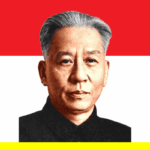
Liu Shaoqi

Liu Shaoqi (1898–1969) was a prominent Chinese revolutionary and statesman who served as the President of the People’s Republic of China from 1959 to 1968. Once considered Mao Zedong’s successor, he was later purged during the Cultural Revolution. Liu died in captivity in 1969 and was posthumously rehabilitated in 1980.

="timeline-item"
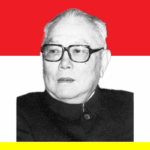
Li Xiannian

Li Xiannian (1909 – 1992) was a prominent Chinese Communist revolutionary, statesman, and military leader. He served as the President of the People’s Republic of China from 1983 to 1988. A key figure in economic planning, he supported Deng Xiaoping’s reforms while maintaining political orthodoxy within the Party.

="timeline-item"
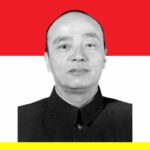
Yang Shangkun

Yang Shangkun (1907 – 1998) was a Chinese Communist revolutionary and politician who served as President of the People’s Republic of China from 1988 to 1993. A key figure in the military and government, he played a controversial role during the 1989 Tiananmen Square crackdown.

="timeline-item"
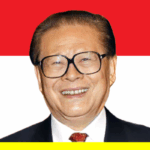
Jiang Zemin

Jiang Zemin (1926 – 2022) was the President of China from 1993 to 2003. He led the country through a period of rapid economic growth and globalization following Deng Xiaoping’s reforms. Jiang also strengthened China’s global presence and emphasized modernization, while maintaining strict political control.

="timeline-item"
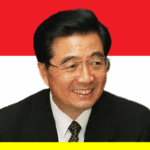
Hu Jintao

Hu Jintao (born-1942) is a Chinese politician who served as the President of the People’s Republic of China from 2003 to 2013. A technocrat and consensus-builder, Hu promoted a “Harmonious Socialist Society” and economic growth while maintaining tight political control during his decade-long leadership of China.

="timeline-item"
Xi Jinping

Xi Jinping (born-1953) is the President of the People’s Republic of China since 2013 and General Secretary of the Chinese Communist Party since 2012. He is China’s most powerful leader since Mao Zedong, known for centralizing authority, eliminating term limits, and advancing the Belt and Road Initiative and global influence.

Establishment of the Presidency

China formally created the office of the President under its 1954 Constitution. The President acts as the head of state and represents China in foreign affairs, while actual policymaking authority rests with the Communist Party’s General Secretary. Over time, the role grew more influential as presidents began to consolidate political and military power.

Notable Presidents of China

The first President, Mao Zedong (1893–1976), shaped modern China through revolutionary leadership and Communist ideology. He laid the foundation of the PRC in 1949 and remained a central figure in politics.

Liu Shaoqi (1898–1969) followed, focusing on economic reforms, but he fell victim to the Cultural Revolution.

Dong Biwu and Song Qingling briefly acted as heads of state during transitional periods.

Li Xiannian (1909–1992) and Yang Shangkun (1907–1998) restored stability in the post-Mao era, managing both reform and modernization.

Jiang Zemin (1926–2022) expanded China’s global influence during his presidency (1993–2003). He balanced economic reforms with strong Party leadership.

Hu Jintao (1942– ), president from 2003 to 2013, promoted the “Scientific Outlook on Development,” emphasizing balanced economic growth and social harmony.

Currently, Xi Jinping (1953– ) serves as President since 2013. He has centralized power, advanced the Belt and Road Initiative, strengthened military modernization, and positioned China as a global power. In 2018, term limits were abolished, allowing him to continue indefinitely.

Conclusion

List of President of China The Presidents of China have played crucial roles in shaping the nation’s path from revolution to modernization. Their leadership reflects the country’s transformation into a global powerhouse, with the presidency symbolizing both political authority and China’s international vision.

Back to top of page