Early Life and Education
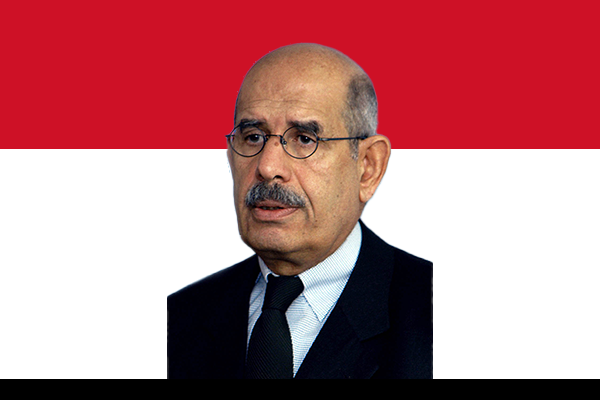
Mohamed ElBaradei was born on June 17, 1942, in Cairo, Egypt. He grew up in a family that valued law, justice, and social responsibility. His father, Mostafa ElBaradei, served as president of the Egyptian Bar Association and defended human rights during turbulent political times. Inspired by this environment, ElBaradei pursued a career in law.
He earned his law degree from Cairo University in 1962 and later moved to the United States to continue his studies. He received a doctorate in international law from New York University School of Law in 1974. His strong academic foundation prepared him for a career in diplomacy and international governance.
Career at the United Nations
ElBaradei began his diplomatic career by joining the Egyptian Ministry of Foreign Affairs in 1964. He worked in Egypt’s missions to the United Nations in New York and Geneva. In these roles, he gained deep experience in international diplomacy, conflict resolution, and multilateral cooperation. In 1980, he joined the United Nations directly, serving as a senior fellow in international law at the UN Institute for Training and Research. His work focused on arms control, international peace, and legal frameworks for global cooperation.
Leadership at the IAEA
ElBaradei reached global prominence when he became Director General of the International Atomic Energy Agency (IAEA) in 1997. He led the organization for three consecutive terms until 2009. Under his leadership, the IAEA strengthened global efforts to prevent nuclear weapons proliferation while promoting peaceful uses of nuclear energy.
He played a central role in addressing nuclear issues in Iraq, Iran, and North Korea. ElBaradei insisted on evidence-based inspections and rejected political pressure from major powers. His insistence on independence and transparency built credibility for the IAEA.
In 2005, the Nobel Peace Prize Committee awarded ElBaradei and the IAEA the Nobel Peace Prize. The award recognized their efforts to prevent nuclear weapons spread and promote peaceful nuclear technology. ElBaradei accepted the prize as a call to further strengthen international law and multilateral diplomacy.
Role in Egyptian Politics
After his retirement from the IAEA in 2009, ElBaradei returned to Egypt. He quickly became a leading voice for democratic reform. He criticized corruption, authoritarianism, and lack of transparency in Egyptian politics.
During the 2011 Egyptian Revolution, ElBaradei emerged as a key opposition leader. He joined protesters in Tahrir Square and called for democratic transition. His international reputation and credibility gave legitimacy to the movement.
In 2013, Egypt’s interim government appointed him Vice President for International Relations after the removal of President Mohamed Morsi. ElBaradei used this position to advocate for political reconciliation and democratic transition. However, he resigned shortly afterward when security forces violently cracked down on protesters. His resignation demonstrated his commitment to nonviolence and human rights.
Legacy and Influence
ElBaradei remains one of Egypt’s most respected statesmen and diplomats. His leadership at the IAEA strengthened global nuclear security. His advocacy for democracy and human rights in Egypt inspired reform movements, even if his time in politics was brief. Internationally, scholars and policymakers regard him as a symbol of principled diplomacy. He demonstrated that independence, truth, and fairness can guide international institutions in moments of crisis.
Conclusion
Mohamed ElBaradei dedicated his life to law, diplomacy, and justice. As Vice President of Egypt, Director General of the IAEA, and Nobel Peace Prize laureate, he consistently defended peace and accountability. His career shows how strong values and international cooperation can shape a safer, more just world.