List of Presidents of Myanmar

Myanmar, formerly known as Burma, is a Southeast Asian country with a long and complex political history. Since gaining independence from Britain in 1948, the country has experienced parliamentary democracy, military rule, socialist governance, and periods of political transition. The office of the President of Myanmar became especially significant after the country adopted different constitutions over time. In modern Myanmar,

LIST OF PRESIDENTS OF MYANMAR

="timeline-item"
Shwe Thaik

Sao Shwe Thaik was the first President of independent Myanmar (then Burma), serving from 1948 to 1952. A respected Shan prince, he played an important role in the country’s early political development after independence from British rule. His presidency symbolized unity among Burma’s diverse ethnic groups during the parliamentary democratic era. Sao Shwe Thaik is remembered as a national leader who represented hope, stability, and cooperation in the formative years of modern Myanmar.

="timeline-item"
Ba U

Ba U was the second President of Burma (now Myanmar), serving from 1952 to 1957. He was a respected lawyer, judge, and statesman who had earlier served as Chief Justice of the Supreme Court. During his presidency, Burma faced political instability, ethnic conflicts, and internal rebellions. Ba U played an important constitutional role in supporting the parliamentary democratic system after independence. His leadership represented an important phase in Burma’s early nation-building efforts before military rule later changed the country’s political path.

="timeline-item"
Win Maung

Win Maung was the third President of Burma (now Myanmar), serving from 1957 to 1962. He was the last civilian president before the military coup led by General Ne Win in 1962. During his presidency, Burma faced political instability and ethnic tensions. Win Maung worked under the parliamentary democratic system established after independence. His term ended when the military seized power, marking the end of democracy and the beginning of long-term military rule in the country.

="timeline-item"
Ne Win

Ne Win was a powerful military leader who dominated Myanmar’s politics after the 1962 coup. He ended civilian rule and established a military government based on the “Burmese Way to Socialism.” His policies isolated the country from the outside world and caused economic decline. Although he was not always officially president, he remained the most influential figure in Myanmar for decades. Ne Win’s rule shaped modern Myanmar’s political history and strengthened long-term military control over the country.

="timeline-item"
San Yu

San Yu was the President of Myanmar (then Burma) from 1981 to 1988 and a senior military leader closely associated with General Ne Win. He served during the socialist one-party era under the Burma Socialist Programme Party. His presidency continued the policies of centralized control and economic isolation. San Yu’s rule ended during the massive 1988 pro-democracy uprising, when public anger against economic hardship and authoritarian rule forced him to step down. His presidency marked the final phase of Burma’s socialist military-backed government.

="timeline-item"
Than Shwe

Than Shwe was a powerful military leader of Myanmar who ruled the country from 1992 to 2011. Although he was not always officially titled president, he was the most influential authority during that period. Under his leadership, Myanmar remained under strict military control, with limited political freedom and international isolation. His government was criticized for human rights abuses and suppressing democracy. However, during his later years in power, he initiated limited political reforms that eventually opened the way for a semi-civilian government.

="timeline-item"
Thein Sein

Thein Sein was the President of Myanmar from 2011 to 2016 and led the country during an important period of political and economic reform. A former military general, he introduced changes such as releasing political prisoners, easing media censorship, and improving relations with Western countries. His government also encouraged foreign investment and democratic dialogue. Although the military still held significant power, Thein Sein’s presidency is often remembered as a key step in Myanmar’s transition from strict military rule toward limited civilian governance.

="timeline-item"
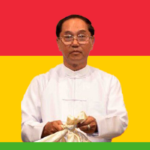
Htin Kyaw

Htin Kyaw was the President of Myanmar from 2016 to 2018 and the first civilian president in the country after decades of military-backed rule. He was a close associate of Aung San Suu Kyi and represented the National League for Democracy (NLD). His presidency symbolized Myanmar’s democratic transition and hopes for political reform. Although he held the office officially, real political influence often remained shared with Aung San Suu Kyi and the military under the country’s constitutional system.

="timeline-item"
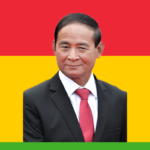
Win Myint

Win Myint is a Myanmar politician who served as the 10th President of Myanmar from 2018 to 2021. He was a close ally of Aung San Suu Kyi and a senior member of the National League for Democracy (NLD). Before becoming president, he served as Speaker of the House of Representatives. His presidency ended after the military coup in February 2021, when he was detained by the armed forces. He is remembered as a key figure in Myanmar’s democratic transition.

="timeline-item"
Myint Swe

Myint Swe is a Myanmar politician and former military officer who became Acting President of Myanmar in February 2021 after the military coup. He is closely associated with the armed forces and previously served as Vice President. Born in 1951, he played an important role in Myanmar’s military-backed government. As Acting President, Myint Swe has mainly functioned within the junta-led political system. His leadership reflects the country’s ongoing political instability, military dominance, and the suspension of democratic governance after the 2021 takeover.

="timeline-item"
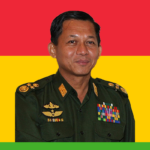
Min Aung Hlaing

Min Aung Hlaing is the military leader of Myanmar and one of the most powerful figures in the country’s modern politics. He became Commander-in-Chief of the armed forces in 2011 and led the military coup in February 2021, removing the elected government. After the coup, he became the central authority in Myanmar’s military administration. His rule has been widely criticized internationally due to political repression, violence, and the ongoing national crisis in Myanmar.

List of Presidents of Myanmar

1. Sao Shwe Thaik (1948–1952)

Sao Shwe Thaik was the first President of independent Burma after the country gained freedom from British rule on 4 January 1948. He was a respected Shan prince and played a symbolic role in uniting different ethnic communities in the new nation. His presidency marked the beginning of Burma’s parliamentary democratic era.

2. Ba U (1952–1957)

Ba U succeeded Sao Shwe Thaik and served during a time when Burma was facing internal instability, including ethnic rebellions and political tensions. He was a legal expert and former Chief Justice. His presidency continued under the parliamentary system established after independence.

3. Win Maung (1957–1962)

Win Maung was the last president of Burma before the military coup of 1962. His term ended when General Ne Win seized power and overthrew the civilian government. This event dramatically changed the country’s political direction and led to decades of military dominance.

4. Ne Win (1962–1981, as head of state influence)

Although Ne Win was primarily the military ruler and not always formally president in the constitutional sense, he became the most powerful leader in Myanmar after the 1962 coup. Under his rule, Burma followed the “Burmese Way to Socialism,” which isolated the country internationally and weakened the economy.

5. San Yu (1981–1988)

General San Yu served as President under the socialist military-backed system. He was closely aligned with Ne Win and continued the policies of centralized control. His presidency ended during the nationwide 1988 pro-democracy uprising, which was one of the most important turning points in Myanmar’s modern history.

6. Saw Maung (1988–1992)

After the 1988 uprising, General Saw Maung became the head of state and leader of the military junta. He promised elections, which were held in 1990, but the military refused to hand over power after the opposition won. His rule deepened political repression.

7. Than Shwe (1992–2011)

Senior General Than Shwe was Myanmar’s most dominant ruler during the later military era. Though his exact constitutional role changed, he was effectively the country’s top leader. His government maintained strict military control but also began limited political reforms in the late 2000s.

8. Thein Sein (2011–2016)

Thein Sein became President after the 2010 elections and led a quasi-civilian government. His presidency was notable for political and economic reforms, the release of political prisoners, and improved relations with the international community.

9. Htin Kyaw (2016–2018)

Htin Kyaw was the first civilian president in decades and a close ally of Aung San Suu Kyi. His election symbolized hope for democratic progress, though the military still retained major constitutional powers.

10. Win Myint (2018–2021)

Win Myint succeeded Htin Kyaw and served until the military coup of February 2021. His removal marked the collapse of Myanmar’s democratic transition and the return of direct military rule.

11. Myint Swe (Acting President, 2021–present in military administration context)

Myint Swe became Acting President after the 2021 military takeover. He is closely associated with the junta and serves in a largely military-controlled political system. His role reflects the continuing crisis in Myanmar.


Back to top of page