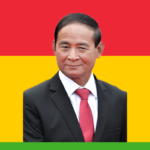
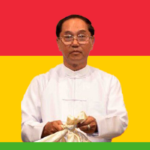
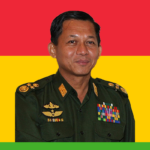
List of Presidents of Myanmar
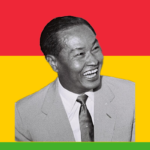
1. Sao Shwe Thaik (1948–1952)
Sao Shwe Thaik was the first President of independent Burma after the country gained freedom from British rule on 4 January 1948. He was a respected Shan prince and played a symbolic role in uniting different ethnic communities in the new nation. His presidency marked the beginning of Burma’s parliamentary democratic era.
2. Ba U (1952–1957)
Ba U succeeded Sao Shwe Thaik and served during a time when Burma was facing internal instability, including ethnic rebellions and political tensions. He was a legal expert and former Chief Justice. His presidency continued under the parliamentary system established after independence.
3. Win Maung (1957–1962)
Win Maung was the last president of Burma before the military coup of 1962. His term ended when General Ne Win seized power and overthrew the civilian government. This event dramatically changed the country’s political direction and led to decades of military dominance.
4. Ne Win (1962–1981, as head of state influence)
Although Ne Win was primarily the military ruler and not always formally president in the constitutional sense, he became the most powerful leader in Myanmar after the 1962 coup. Under his rule, Burma followed the “Burmese Way to Socialism,” which isolated the country internationally and weakened the economy.
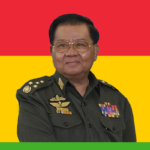
5. San Yu (1981–1988)
General San Yu served as President under the socialist military-backed system. He was closely aligned with Ne Win and continued the policies of centralized control. His presidency ended during the nationwide 1988 pro-democracy uprising, which was one of the most important turning points in Myanmar’s modern history.
6. Saw Maung (1988–1992)
After the 1988 uprising, General Saw Maung became the head of state and leader of the military junta. He promised elections, which were held in 1990, but the military refused to hand over power after the opposition won. His rule deepened political repression.
7. Than Shwe (1992–2011)
Senior General Than Shwe was Myanmar’s most dominant ruler during the later military era. Though his exact constitutional role changed, he was effectively the country’s top leader. His government maintained strict military control but also began limited political reforms in the late 2000s.
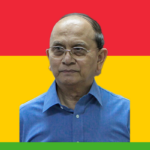
8. Thein Sein (2011–2016)
Thein Sein became President after the 2010 elections and led a quasi-civilian government. His presidency was notable for political and economic reforms, the release of political prisoners, and improved relations with the international community.
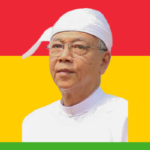
9. Htin Kyaw (2016–2018)
Htin Kyaw was the first civilian president in decades and a close ally of Aung San Suu Kyi. His election symbolized hope for democratic progress, though the military still retained major constitutional powers.
10. Win Myint (2018–2021)
Win Myint succeeded Htin Kyaw and served until the military coup of February 2021. His removal marked the collapse of Myanmar’s democratic transition and the return of direct military rule.
11. Myint Swe (Acting President, 2021–present in military administration context)
Myint Swe became Acting President after the 2021 military takeover. He is closely associated with the junta and serves in a largely military-controlled political system. His role reflects the continuing crisis in Myanmar.