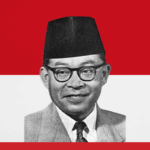
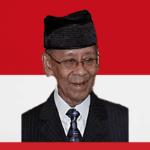
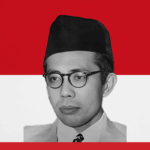
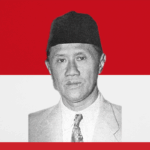
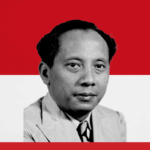
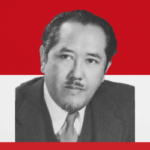
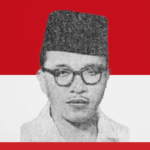
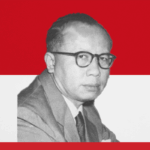
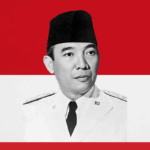
List of Prime Ministers of Indonesia

Indonesia, following its declaration of independence in 1945, initially adopted a parliamentary system of government in which the Prime Minister served as the head of government, while the President acted as the ceremonial head of state. This system allowed the Prime Minister to oversee day-to-day administration, form cabinets, and manage legislative affairs. Over time, Indonesia transitioned to a presidential system under President Sukarno, which abolished the office of Prime Minister.

LIST OF PRIME MINISTES OF INDONESIA

="timeline-item"
Sutan Sjahrir

Sutan Sjahrir (1909–1966) was Indonesia’s first Prime Minister and a leading nationalist intellectual during the country’s struggle for independence. A proponent of parliamentary democracy, he emphasized diplomacy, political negotiation, and moderation, distinguishing himself from more radical revolutionary leaders. Sjahrir worked tirelessly to gain international recognition for Indonesia and to maintain unity amid internal and external challenges. Known for his eloquence, pragmatism, and commitment to democratic principles, he played a pivotal role in shaping Indonesia’s early government and establishing the foundations of its parliamentary system.

="timeline-item"
Amir Sjarifuddin Harahap

Amir Sjarifuddin Harahap (1907–1948) was an influential Indonesian politician, lawyer, and nationalist leader who served as the second Prime Minister of Indonesia from 1947 to 1948. A committed socialist, he played a key role in organizing resistance against Dutch efforts to recolonize Indonesia after independence. His government focused on social reforms, national defense, and diplomacy during the revolutionary period. Amir’s tenure was marked by political challenges and conflicts with rival factions, and he was executed following his involvement in the Madiun Affair.

="timeline-item"
Mohammad Hatta

Mohammad Hatta (1902–1980) was a prominent Indonesian statesman, nationalist, and independence leader who served as the country’s first Vice President and also as Prime Minister from 1948 to 1950. Known as the “Father of Indonesian Democracy,” Hatta played a critical role in negotiating Indonesia’s independence from the Netherlands and shaping the early republic’s governance. He advocated economic development, education, and parliamentary democracy, emphasizing ethical leadership and social justice. Hatta remains a revered figure in Indonesia’s history for his vision and statesmanship.

="timeline-item"
Abdul Halim

Abdul Halim was an Indonesian politician who briefly served as Acting Prime Minister during transitional periods in the early years of Indonesia’s parliamentary system. He played a key role in maintaining government continuity and overseeing administrative functions amid political instability. Known for his pragmatic approach, Abdul Halim helped facilitate cabinet operations and ensured the smooth functioning of the executive branch while Indonesia navigated the challenges of post-independence nation-building and parliamentary governance. His contributions supported the consolidation of the young republic.

="timeline-item"
Mohammad Natsir

Mohammad Natsir (1908–1993) was an influential Indonesian Islamic scholar, politician, and statesman who served as Prime Minister from 1950 to 1951. A key advocate for Indonesia’s parliamentary democracy, he emphasized national unity, education reform, and the integration of Islamic principles into governance. Natsir played a central role in promoting cooperation between secular and religious political factions and strengthening Indonesia’s international standing. He later became a prominent leader in the Masyumi Party, continuing to influence political and religious discourse in Indonesia.

="timeline-item"
Soekiman Wirjosandjojo

Soekiman Wirjosandjojo (1898–1958) was an influential Indonesian politician and statesman who served as the Prime Minister of Indonesia from 1951 to 1952. A leader of the Masyumi Party, he advocated for Islamic-oriented political policies while promoting national unity and economic development. During his tenure, Soekiman focused on strengthening parliamentary governance, addressing regional challenges, and improving diplomatic relations with other nations. He played a significant role in shaping Indonesia’s early parliamentary system and post-independence political landscape.

="timeline-item"
Wilopo

Wilopo was an Indonesian politician who served as Prime Minister of Indonesia from 1952 to 1953 during the country’s early parliamentary era. A member of the Indonesian National Party (PNI), he led a coalition government focused on economic management, administrative reform, and political stability. His tenure was marked by challenges such as military tensions and land disputes, including the Tanjung Morawa incident, which weakened his cabinet. Despite his short term, Wilopo remains an important figure in Indonesia’s early democratic development.

="timeline-item"
Ali Sastroamidjojo

Ali Sastroamidjojo was a prominent Indonesian politician and diplomat who served twice as Prime Minister of Indonesia, from 1953 to 1955 and again from 1956 to 1957. A leading member of the Indonesian National Party (PNI), he played an important role in strengthening parliamentary democracy during the early years of independence. He is especially remembered for supporting Indonesia’s international diplomacy, including the historic Bandung Conference of 1955, which promoted Asian-African solidarity and anti-colonial cooperation.

="timeline-item"
Burhanuddin Harahap

Burhanuddin Harahap was an Indonesian politician who served as Prime Minister of Indonesia from 1955 to 1956. A leading member of the Masyumi Party, he is best remembered for overseeing the country’s first general elections in 1955, a major milestone in Indonesia’s democratic development. His government focused on political reform, restoring public confidence, and improving administration after a period of instability. Burhanuddin also emphasized anti-corruption efforts and civilian governance, making him an important figure in Indonesia’s early parliamentary era.

="timeline-item"
Djuanda Kartawidjaja

Djuanda Kartawidjaja (1911–1963) was an Indonesian statesman and engineer who served as the last Prime Minister of Indonesia from 1957 to 1959. He is best known for the Djuanda Declaration of 1957, which asserted Indonesia’s sovereignty over its surrounding seas and became a foundation of the country’s modern maritime boundaries. A respected technocrat, Djuanda focused on national unity, economic administration, and state modernization. His leadership marked the end of Indonesia’s parliamentary era before the country shifted fully to a presidential system.

="timeline-item"
Sukarno

Sukarno was the founding President of Indonesia and one of the most important leaders in the country’s history. He proclaimed Indonesia’s independence in 1945 and became its first president, serving until 1967. A charismatic nationalist, Sukarno promoted unity, anti-colonialism, and the ideology of Pancasila as the foundation of the state. He played a major role in international affairs, especially among newly independent nations. His leadership helped shape modern Indonesia, although his later years were marked by political instability and economic challenges.

List of Prime Ministers of Indonesia

Sutan Sjahrir (1945–1947) – The first Prime Minister of Indonesia, Sjahrir was a key nationalist leader and intellectual. He focused on diplomacy during Indonesia’s struggle for international recognition of independence, negotiating with the Dutch and maintaining internal political stability amid revolutionary challenges.

Amir Sjarifuddin (1947–1948) – A former socialist leader, Amir Sjarifuddin led the government during a difficult post-revolutionary period. His administration prioritized social reforms and military coordination during the ongoing struggle against Dutch attempts to regain control.

Mohammad Hatta (1948–1950) – Also Indonesia’s first Vice President, Hatta served as Prime Minister during the formative years of the republic. He emphasized economic reconstruction, diplomacy, and consolidation of the young nation’s administrative structures. Hatta’s pragmatic leadership helped stabilize the government amid civil unrest and international pressure.

Susanto Tirtoprodjo (1950) – Served briefly as acting Prime Minister during transitional arrangements toward a unitary state, focusing on cabinet organization and administrative continuity.

Mohammad Natsir (1950–1951) – A leading Islamic politician, Natsir became Prime Minister following the restoration of Indonesia’s unitary state. He emphasized national integration, education reform, and promoting parliamentary democracy. His administration strengthened ties between the central government and regional entities.

Sutan Syahrir (acting, 1951) – Returned briefly to oversee government transitions and cabinet formations, ensuring political continuity during a period of parliamentary instability.

Wilopo (1952–1953) – Led a coalition government, addressing economic development and public administration issues, while managing political tensions between secular and Islamic parties.

Ali Sastroamidjojo (1953–1955, 1956–1957) – Served two terms as Prime Minister, promoting industrialization, foreign diplomacy, and strengthening Indonesia’s presence in international organizations such as the United Nations and the Bandung Conference.

Djuanda Kartawidjaja (1957–1959) – Djuanda is notable for issuing the Djuanda Declaration, asserting Indonesia’s territorial waters. His tenure marked the last Prime Ministership before President Sukarno transitioned Indonesia to a guided presidential system, abolishing the office.

The Prime Ministership of Indonesia, though short-lived, was foundational for the early governance of the republic. It enabled parliamentary leadership, policy development, and diplomacy during the critical post-independence years. Following 1959, Indonesia adopted a presidential system, centralizing executive authority in the President and ending the formal role of Prime Minister.
Back to top of page